Post the Ugly Draft: Why Sharing Your Worst Work First Is the Smartest Thing You Can Do
There's a version of creative confidence that looks like this: you only show finished things. You wait until the work is polished, refined, unimpeachable. You curate carefully. You maintain an aesthetic. Every post is considered. Every upload represents your best.
That version of confidence is increasingly losing ground to something messier, more honest, and — it turns out — far more effective at building lasting trust with an audience.
The new confidence move is posting the ugly draft.
What Changed
For a long time, the implicit agreement between creator and audience was simple: I make the thing, I clean it up, I show you the result. The mess was private. The process was yours alone. What the audience received was a finished object, scrubbed of the uncertainty and failure that produced it.
That agreement is breaking down — and audiences, particularly younger ones, are the ones breaking it. They're not just tolerating behind-the-scenes content. They're actively seeking it out, responding to it more deeply, and trusting creators more because of it.
The shift has something to do with media literacy. An audience that has grown up watching polished content gets very good at recognizing it for what it is: a performance of competence. And a performance of competence, however impressive, doesn't tell you much about the person performing it.
But a bad early sketch? A rejected take on a song that didn't work? A paragraph that got cut because it was embarrassing? That tells you something real. That's evidence of a human being actually working.
Wabi-Sabi and the Beauty of the Incomplete
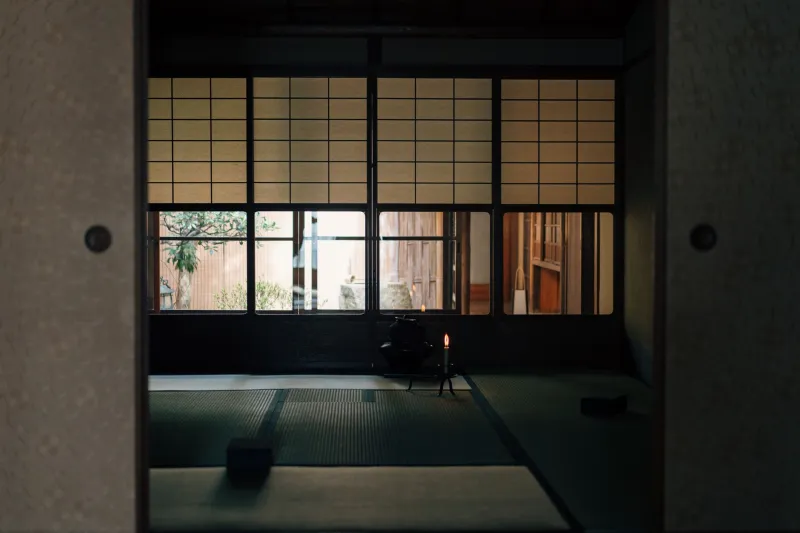
Japanese aesthetics has a concept — wabi-sabi — that describes the beauty found in impermanence, imperfection, and incompleteness. A tea bowl with an asymmetrical rim. A ceramic glaze that cracked in the kiln. A garden that changes with the season and never looks exactly the same twice.
Wabi-sabi isn't about celebrating failure for its own sake. It's about recognizing that the marks of process — the evidence that something was made, that time passed, that a human hand was involved — are part of what makes an object meaningful. Removing those marks doesn't improve the object. It just makes it more abstract, more distant from the experience of being made.
American creators are arriving at a similar place through a different cultural route. Not through an aesthetic philosophy exactly, but through the very practical discovery that showing imperfection builds more trust than hiding it.
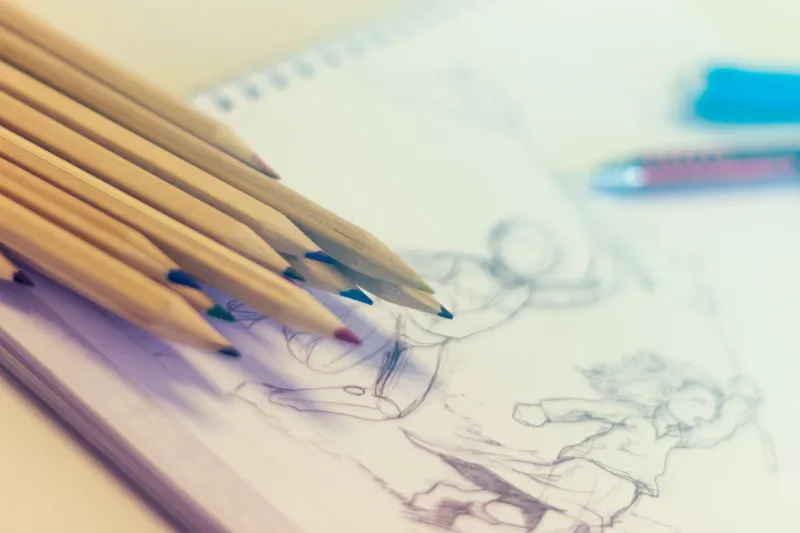
When illustrator Dani F. started posting her sketchbook pages alongside her finished work, she wasn't making a philosophical statement. She was tired. "I didn't have the energy to only show the good stuff anymore," she says. "So I just started showing everything."
The response surprised her. Engagement on the rough pages matched — sometimes exceeded — engagement on her finished illustrations. People tagged friends in the sketches. They asked questions about her process. They came back to watch a piece develop across multiple posts. "I basically accidentally built a community by being too exhausted to curate," she laughs.
The Failure Archive as a Trust Document
Some creators are going further than occasional process posts. They're building what you might call failure archives — deliberately organized collections of rejected work, abandoned projects, and experiments that didn't land.
Writer and essayist Marcus T. maintains a section of his newsletter called "The Discard Pile," where he shares pieces he wrote and ultimately decided not to publish, along with a short note explaining why. The pieces are sometimes genuinely bad. Sometimes they're just wrong for the moment. Sometimes he's not sure why he abandoned them and says so.
"People respond to that section more than almost anything else I write," he says. "I think it's because they recognize the experience. Everyone has a discard pile. Nobody talks about theirs."
That recognition — I do that too — is doing something that polished work rarely manages. It's creating identification rather than admiration. And identification is stickier. You can admire someone from a distance. You identify with them up close.
The Credibility of the Struggle
There's a credibility that comes with showing struggle that can't be manufactured after the fact. When a creator shares a rough early version of something and then later shares the finished version, the audience has witnessed the whole arc. They know what it cost. They have context for the final result that makes it mean more.
Compare that to showing only the finished piece. It might be technically superior. It might be more impressive in isolation. But it exists without history. The audience has no way to locate it in a process, no way to understand what it took to get there. It's just an object that appeared.
Producer and musician Sam K. started sharing voice memo recordings of early song ideas — raw, half-formed, sometimes barely coherent — before he began proper production. "The people who follow the voice memos are different listeners," he says. "When the finished song comes out, they hear it differently. They know where it came from."
That shared knowledge creates a kind of ownership. The audience feels like they participated in the making, even though they only witnessed it. That feeling keeps them coming back.
What This Actually Requires
Posting the ugly draft is not the same as posting anything carelessly. The creators doing this well are making deliberate choices about what to share and why. They're not abandoning standards — they're expanding what they consider worth sharing.
The distinction matters. Sharing a rough sketch with context — "this is where I started, I had no idea what I was doing yet" — is different from posting low-effort work and calling it a process. The first invites the audience into a real journey. The second is just lowering the bar.
Done right, sharing imperfect work requires more vulnerability than sharing finished work, not less. It means letting people see you before you've figured it out. It means trusting that the mess is interesting rather than hiding it.
And increasingly, that trust — the willingness to be seen in progress — is exactly what audiences are looking for. Not proof that you always know what you're doing. Proof that you keep doing it anyway, even when you don't.
Post the ugly draft. It might be the most confident thing you make all year.