Ink on Paper, Meant for You: How Japanese Letter Culture Is Pulling Gen Z Away From the Screen
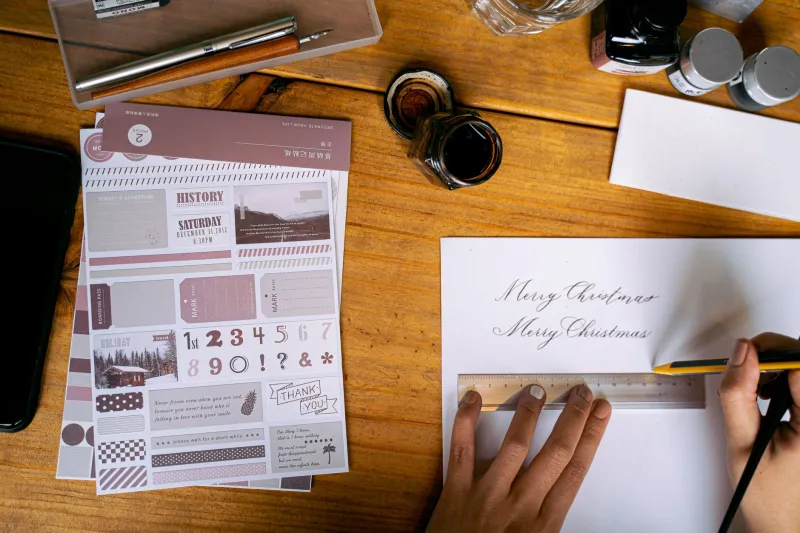
There's a shoebox under Marisol Vega's bed in Portland that she calls her "archive." Inside it are maybe forty envelopes, some decorated with washi tape, some sealed with pressed flower stickers, a few written in Japanese with English tucked inside like a secret. She's 23. She found her first one in a zine swap she stumbled onto through a Discord server two years ago, and she hasn't stopped collecting since.
"It's not nostalgia," she says. "I never really wrote letters before. This is completely new to me."
That's kind of the point.
The Tradition That Never Actually Stopped
In Japan, the art of written correspondence has always carried weight. Tegami—letters—are treated with a formality and care that borders on ceremonial. The paper matters. The ink matters. The envelope matters. Even the timing of when you send something is considered. There's a whole vocabulary around seasonal greetings, handwritten thank-you notes after events, and illustrated postcards (ehagaki) that function almost like miniature artworks sent through the mail.
Japanese stationery culture, which is enormous, feeds directly into this. Shops like Itoya in Tokyo dedicate entire floors to paper goods. Fountain pen communities are active and multigenerational. Hobonichi planner users treat their notebooks like personal archives. The idea that writing something by hand makes it real — that it carries a different kind of weight than a text — is genuinely embedded in how a lot of Japanese creators think about communication.
What's changed is that this sensibility is now crossing the Pacific in a very organic, creator-driven way.
When Fan Mail Became an Art Form
A lot of this started, predictably, with music. Japanese indie artists and bedroom producers who built small but devoted US followings started doing something their American counterparts rarely do: they wrote back. Not form emails. Actual letters. Sometimes with drawings. Sometimes with little handmade inserts — a lyric scrawled out, a doodle, a piece of washi tape.
For fans used to getting a bot auto-reply or a mass DM, receiving something physical felt almost disorienting. And then it felt incredible.
That experience rippled outward. Fans started writing back. Then they started writing to each other. Zine communities that had always been around got a fresh influx of people who weren't necessarily into zines as a political act or a punk tradition — they just wanted to make something you could hold.
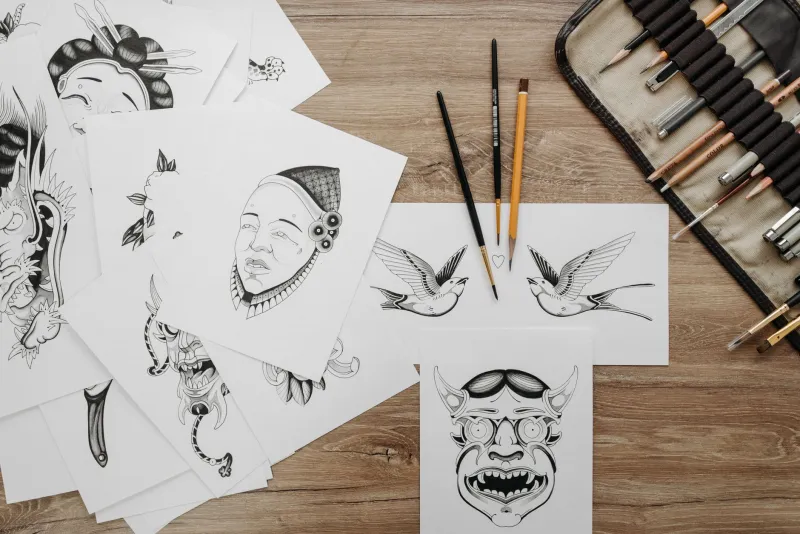
The artist-to-fan letter exchange became a whole subgenre of creative practice. Some illustrators now offer handwritten postcards as Patreon tiers. Others host "mail art" exchanges where participants send original small works through the post. The rules are loose. The only real requirement is that it's physical and it's made by hand.
Why Pen-on-Paper Became a Status Move
Here's the thing nobody expected: in a culture absolutely drowning in content, the handwritten letter has become a kind of flex.
Not in a showy way. More like the opposite. In a world where everything is screenshottable, shareable, and instantly forgettable, receiving something that was made specifically for you — that can't be copy-pasted, that has the pressure of a real pen behind every word — signals something different. It says: I spent time on this. I thought about you specifically. This is not a broadcast.
Gen Z, for all the ways they've been written off as screen-addicted, is actually pretty attuned to authenticity signals. They can smell a curated "personal" post from a mile away. A letter with uneven handwriting and a coffee ring on the corner? That's harder to fake.
Japanese creators seem to understand this instinctively. The aesthetic of imperfect, intentional making — the same energy behind wabi-sabi, behind the value placed on the handmade over the mass-produced — translates directly into why a handwritten note carries more emotional voltage than a perfectly designed digital message.
The Zine Connection
Zines have always been the scrappy cousin of the art world, but the current wave has a distinctly Japanese flavor. Doujinshi — self-published fan works with long roots in Japanese comics and music culture — introduced a lot of young American creators to the idea that small-run, handmade publishing is legitimate. More than legitimate. It's desirable.
What's emerged is a hybrid form: part zine, part letter, part art object. Creators are making runs of twenty or thirty copies of something, mailing them out to people who've earned them through community participation, trading them at meetups, tucking them into packages with other handmade goods. The Japanese stationery influence shows up in the materials — quality paper, deliberate layout, little tactile details like embossed covers or hand-stitched binding.
For a lot of these makers, the process is as much the point as the product. Writing by hand slows you down. It forces a different kind of thinking. You can't delete. You can't undo. Every crossed-out word stays on the page.
Learning to Write Again
There's a funny practical side to all of this: a lot of Gen Z creators openly admit they had to relearn how to write by hand. Years of keyboards had made their handwriting genuinely difficult to read, even to themselves. Some started practicing with Japanese brush lettering tutorials on YouTube. Others bought calligraphy starter sets. A few just committed to writing badly and slowly until it got better.
That process of relearning has become part of the culture too. It's okay to share your messy practice pages. It's okay to acknowledge that this is a skill you let atrophy. The point isn't perfection — it's presence.
That framing, again, feels deeply Japanese to me. The idea that a practice has value not just in its output but in the doing of it. That showing up to the page, even imperfectly, is itself a meaningful act.
What Gets Said in Letters That Doesn't Get Said Anywhere Else
Ask anyone who's gotten deep into this and they'll tell you the same thing: the letters say things that nothing else does.
Not because the writers are suddenly more eloquent. But because the format demands a different kind of honesty. You're not performing for an audience. There's no like count. The person on the other end is specific — a real individual you're choosing to address. That changes what you write.
Creators talk about writing to collaborators and saying things they'd never post publicly. Fans describe writing to artists and expressing something genuine that would feel too vulnerable in a comment section. The privacy of paper creates a different kind of permission.
In a creative landscape where everything is content, the letter is the one thing that refuses to be. It stays between two people. It lives in a shoebox under a bed in Portland. It doesn't go anywhere except where it's supposed to go.
That might be the most radical thing about it.