One Person, Thousands of People: The Strange Community Inside Solo Creative Work
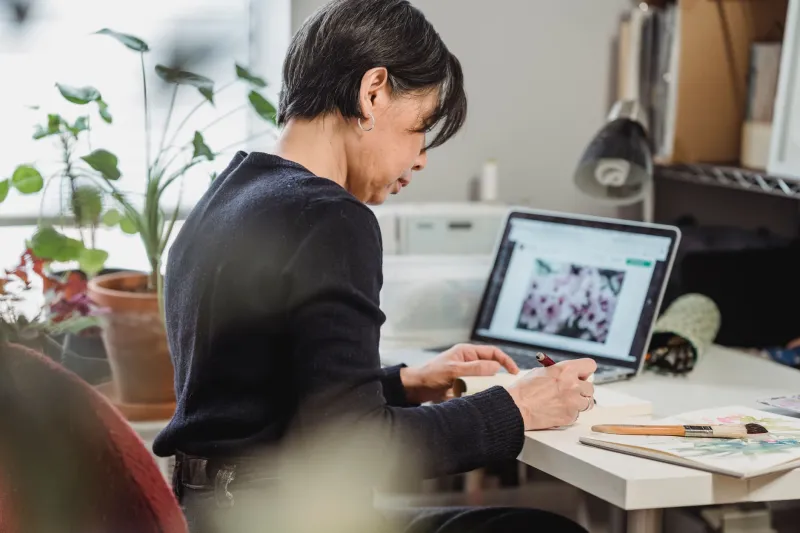
There's a particular kind of quiet that settles over a one-person creative operation at 11pm. No Slack notifications. No creative director waiting on revisions. Just you, your tools, and whatever you're trying to make. It sounds lonely. For a lot of creators right now, it's turning out to be the opposite.
Something unexpected is happening in American creative culture. The solo artist — the one-person band, the illustrator who runs their own newsletter, the writer who answers every DM themselves — is building some of the most loyal, emotionally invested audiences on the internet. Not despite working alone. Because of it.
The Myth of the Lonely Creator
We've spent years treating solo creative work as a stepping stone. You work alone until you can afford a team. You do everything yourself until you can delegate. The assumption has always been that scaling up means bringing more people in, and that more people means better work and bigger reach.
But a growing number of creators are rejecting that logic entirely — and their audiences are rewarding them for it.
Take someone like Mara T., a visual artist based in Portland who makes intricate, labor-intensive ink drawings and posts them to a modest but fiercely engaged following. She's turned down collaboration offers and brand partnership deals that would have required her to bring in outside help. Her reason? "The people who follow me know it's just me. They know when I post something, I made every single line. That's the whole point."
Her audience doesn't just consume her work. They track her progress. They notice when her style shifts. They remember pieces she made two years ago. That kind of attention is rare, and it doesn't happen by accident.
What Gen Z Actually Wants
Here's the thing about Gen Z as an audience: they're not naive. They've grown up watching brands manufacture authenticity, watching influencers get caught with undisclosed partnerships, watching the machinery behind the curtain get exposed over and over again. They're not cynical exactly — but they're calibrated. They can tell when something was made by a person and when it was made by a process.
Solo creative work, by its nature, carries a kind of signature that's hard to fake. The pacing is off in a human way. The obsessions are specific. The rough edges are real. And Gen Z, more than any previous audience demographic, tends to find that more compelling than anything polished and committee-approved.
Jordan K., who records and releases music entirely on his own out of a converted closet studio in Austin, puts it simply: "I think people can feel when something comes from one nervous system. It's not something I can explain technically. But the listeners feel it."
His releases don't chart. His videos don't go viral. But the community around his music is the kind that shows up to his live sets and buys physical copies of records they could stream for free. That's not passive consumption. That's investment.
The Paradox in Practice
The loneliness paradox works like this: when you remove the buffer of a team, the audience becomes your collaborator by default. They fill the relational space that a co-creator or creative director might otherwise occupy. They send reactions, ask questions, offer interpretations of your work that you never considered. The conversation becomes part of the creative process.
This isn't just a nice side effect. For many solo creators, it's become a structural part of how they work. Writer and essayist Priya S. describes her newsletter readership as "the room I write into." She knows her readers by name, knows what they're working through, shapes her pieces around questions they've actually sent her. "It stopped feeling like publishing and started feeling like correspondence," she says.
That's a different relationship to an audience than most media companies are built to produce. It's slower, messier, and harder to scale. It's also harder to replicate.
Depth Over Distribution
What solo creators are quietly proving is that the metrics most platforms optimize for — reach, impressions, follower count — don't actually capture the thing that makes creative work matter to people. Depth does. Specificity does. The sense that a real human being made something and meant it.
This is something Japanese creative culture has understood for a long time. The idea that a maker's presence is embedded in their work — that the hand that made something is part of what you're receiving when you experience it — runs through everything from traditional craft to contemporary independent music. It's not mystical. It's just relational.
American solo creators are arriving at the same place through a different door. Not through tradition, but through trial and error, through burning out on collaboration, through discovering that working alone and connecting deeply aren't opposites.
The Community You Build by Yourself
None of this is to say solo work is easy or that isolation is a creative strategy. The creators building real community through independent work are deliberate about how they show up. They're consistent. They're honest about their process. They make the aloneness visible rather than hiding it behind a professional veneer.
That visibility is the thing. When an audience knows it's just you — that the work is coming directly from one person's mind and hands — they relate to it differently. They feel responsible to it in a way they don't with brand content or team-produced media.
And maybe that's the real shift happening here. Not just a trend toward solo creative operations, but a broader recalibration of what audiences are looking for. Less production value. More presence. Less polish. More proof that a human being was actually in the room.
The loneliness paradox turns out not to be a paradox at all. It's just what happens when you stop managing the distance between yourself and the people you're making things for.