Breathe It In: How Japanese Craft Studios Designed a Workspace Your Whole Body Can Feel
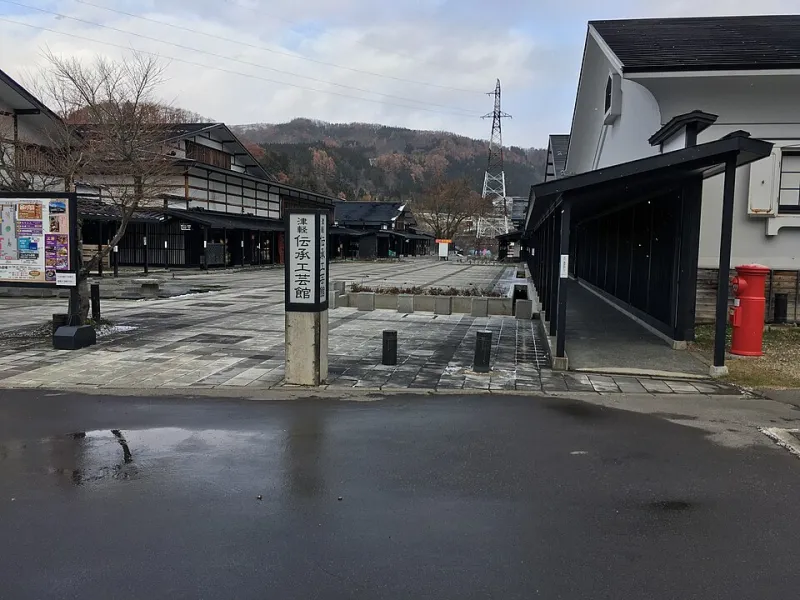
Photo: Higa4, CC0, via Wikimedia Commons
Walk into a traditional Japanese ink studio — a sumi workshop tucked into a narrow building in Nara or a back-street atelier in Kyoto — and the first thing that hits you isn't what you see. It's what you smell. There's a deep, almost earthy warmth in the air. Pine soot. Animal glue. Something faintly sweet underneath it all. Your brain registers this is a place where things are made before your eyes have even adjusted to the light.
That's not an accident. It's a design decision centuries in the making.
The Senses Japanese Artisans Never Ignored
Western workspace design has been pretty obsessed with the visual. We agonize over monitor placement, accent wall colors, the angle of natural light. And look, none of that is wrong. But Japanese craft culture took a wider view. Artisans building their studios — whether they worked in lacquer, ceramics, paper, or textiles — treated smell, touch, and even taste as active participants in the creative process.
Take incense. In ink-making studios, specific blends of koh (Japanese incense) were burned not as decoration but as a kind of sensory clock. Certain scents marked the start of a working session. Others signaled rest. The smell itself became a cue that trained the body to shift into a focused, receptive state. It's the same logic behind your morning coffee ritual, except here it was deliberately engineered rather than accidentally discovered.
The wood choices in these spaces are just as intentional. Paulownia — kiri — shows up everywhere in traditional Japanese workshops because it's lightweight, resistant to moisture, and has almost no scent of its own. That matters when you're working with materials that have their own strong aromatic presence. You don't want the storage chest competing with the lacquer. Meanwhile, tool handles were often made from harder, denser woods that felt substantial in the hand — not because they needed to be for structural reasons, but because weight communicates craft. A tool that feels serious makes the person holding it feel serious.
Texture as a Creative Signal
There's a concept in Japanese aesthetics called te no kioku — roughly, the memory of the hands. The idea is that your hands remember. They build up an archive of textures, resistances, and temperatures that directly informs how you approach material. Potters in the Bizen tradition talk about this constantly: the way the clay feels on a humid morning versus a dry afternoon changes how they work, not just practically but emotionally and creatively.
This is why floor materials in traditional craft spaces were chosen so carefully. Tatami has a specific give underfoot. Standing on it for hours is different from standing on concrete or hardwood — your body distributes weight differently, your posture shifts, your fatigue patterns change. None of this was documented in a UX report. It was just known, passed down through generations of makers who paid attention to their own bodies.
American creators are starting to pick this up, though often by accident. Interior designers working with artists in Brooklyn lofts and Portland studio spaces have started hearing the same request: I want it to feel like something when I walk in. Not just look good. Feel good. The distinction is significant.
What Happens When You Actually Try This
A ceramics instructor in Asheville, North Carolina started burning sandalwood incense at the beginning of every class session — not for atmosphere, but as a signal. After a few weeks, students reported that the smell alone started putting them in a working headspace before they'd even sat down at the wheel. She hadn't read a study on it. She'd visited a workshop in Japan and noticed how her own body responded.
A graphic designer in Chicago swapped out her Ikea desk for one with a solid walnut top — not because walnut is trendy, but because she'd read about the te no kioku concept and wanted to see if touching something real changed how she worked. Her verdict after three months: "I stop fidgeting. I actually just... work."
These aren't dramatic transformations. They're small recalibrations. But they add up.
Sound, the Conspicuous Absence
Here's the thing that makes all of this stranger and more interesting: traditional Japanese craft spaces were rarely designed with sound in mind. Not in the way they considered smell or texture. Sound was more often managed — kept out rather than curated. Thick walls, interior courtyards, placement away from street noise. The goal wasn't a soundscape. It was a kind of acoustic neutrality that let the sounds of the work itself become the only sound.
The scratch of a brush. The tap of a chisel. The creak of a wooden stool.
That's a philosophy that runs completely counter to how most American creatives approach audio in their workspace. We build playlists. We run lo-fi streams. We treat background music as a basic requirement. And maybe that works fine. But there's something worth sitting with in the idea that a space designed to engage every other sense — so richly, so deliberately — chose to leave sound mostly alone.
Building Your Own Multisensory Studio
You don't need a Kyoto atelier or a budget for custom joinery. The principles scale down pretty readily.
Start with smell, because it's the fastest route to the brain's memory and focus centers. Pick one scent — incense, a candle, even a specific hand lotion — and use it only when you're working. Give it a few weeks. Let your nervous system build the association.
Then think about what your hands touch most. Your mouse. Your keyboard. Your sketchbook cover. Are those textures communicating anything to you, or are they just... neutral? Swapping in something with more presence — a leather desk pad, a wooden stylus rest, a heavier pen — costs almost nothing and changes quite a bit.
Finally, consider what your space smells like when you're not burning incense. Old coffee? Dry air conditioning? Synthetic carpet? These are background signals your body is reading constantly, and they're not neutral. They're telling you something — usually that you're in a generic space built for no one in particular.
Japanese craft studios were built for someone specific: the person who was going to spend years, sometimes a lifetime, making things inside them. That intentionality is the real design lesson. Not the incense. Not the paulownia. The decision to treat the body as a creative instrument that needs tuning, not just a vehicle for hauling your brain to the desk.
Your workspace can do that too. It just has to be designed like it matters.