They Stopped Counting and Started Connecting: The Japanese Artist Playbook That's Quietly Breaking the Internet
There's a specific kind of anxiety that lives inside every American content creator's phone. It's the reflex — the compulsive tap-open-check cycle that turns a Tuesday afternoon into a data audit. Impressions down. Watch time up. Follower growth flat. Save rate promising. The numbers become a second language, and somewhere along the way, the actual work becomes a vehicle for the numbers rather than the point of the whole operation.
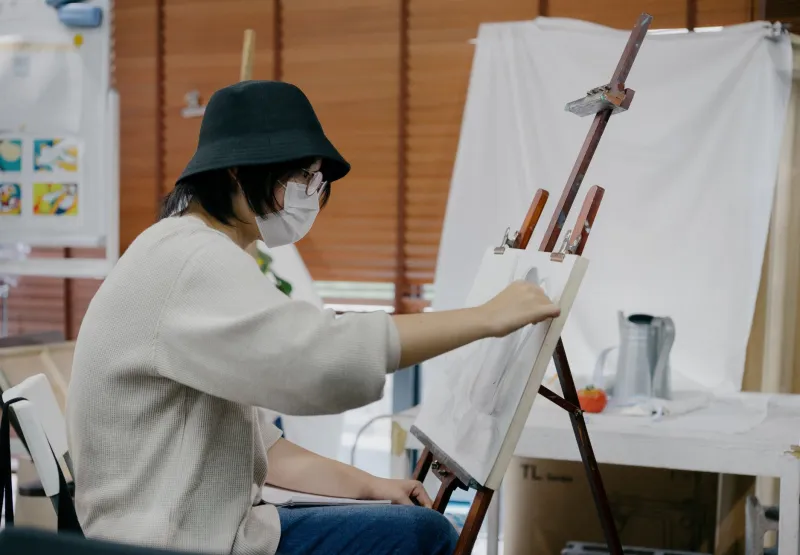
Now consider a different scenario. An illustrator in Kyoto posts new work when it's ready. No caption strategy, no posting schedule, no hashtag research. She doesn't track who's saving her images or where the traffic comes from. And yet, over the years, she's accumulated a fanbase that buys every limited print run within hours, writes her letters from countries she's never visited, and waits patiently — sometimes for months — between releases. No algorithm hacks. No viral moments. Just work, and people who genuinely love it.
This isn't a fairy tale. It's a pattern that keeps showing up across Japan's independent creative scene, and it's making a lot of US creators stop and ask an uncomfortable question: what if the metrics are the problem?
The Data Trap Nobody Warned You About
Here's the thing about optimizing for engagement — it works. Post at the right time, use the trending audio, hook them in the first three seconds, and yes, the numbers go up. But there's a cost that doesn't show up in any dashboard. When you shape your creative decisions around what the algorithm rewards, you start making work for an imaginary average viewer rather than for the specific, weird, passionate people who actually want what only you can make.
Japanese independent creators, particularly those working in illustration, ceramics, experimental music, and zine culture, have largely sidestepped this trap — not always intentionally, but often as a byproduct of a creative culture that treats the work itself as the primary obligation. The idea of compromising a piece to make it more shareable would strike many of them as genuinely strange. You make the thing. The right people find it.
That philosophy sounds almost reckless by American standards, where creator economy advice is basically a full industry. But the results are hard to argue with.
What Devotion Actually Looks Like
The difference between a large audience and a devoted one is almost impossible to measure, which is probably why so few people talk about it. But any creator who's experienced both knows exactly what it feels like.
A large audience scrolls past. A devoted one waits.
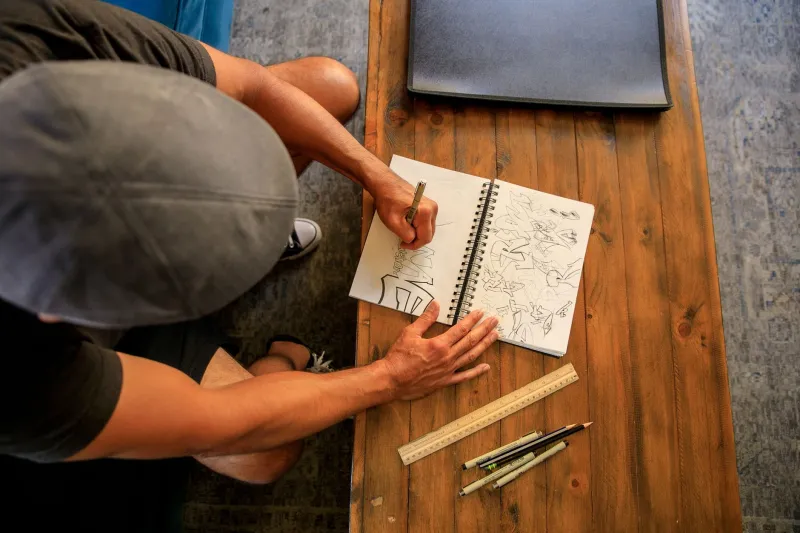
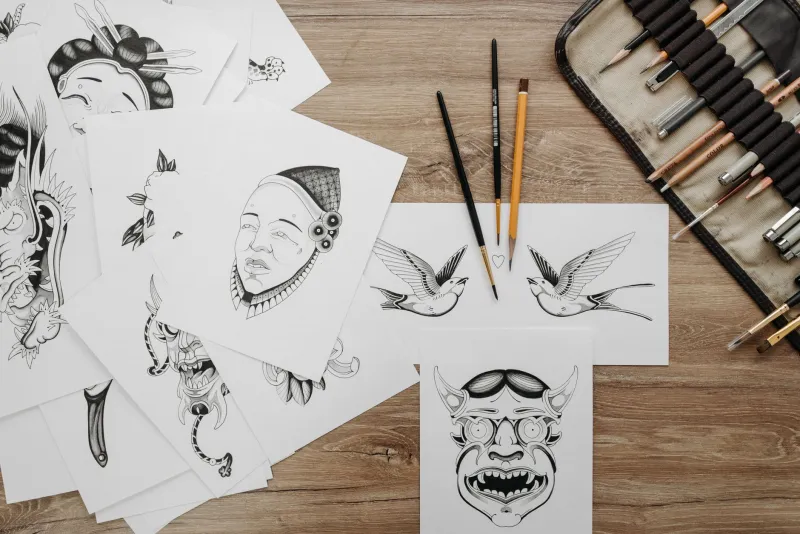
Take the underground doujinshi scene in Japan — self-published comics and art books sold at events like Comiket, largely outside mainstream distribution channels. Many of the artists who sell out their print runs every single event have social media followings that would be considered modest by influencer standards. But their fans plan trips around release dates. They camp out. They know the artist's visual shorthand, their recurring symbols, the subtle shifts in their line work from one year to the next. That kind of intimacy doesn't come from a well-timed post. It comes from years of consistent, uncompromised work that rewards close attention.
The same dynamic plays out in Japan's independent music scene, where artists like Ichiko Aoba built international cult followings — particularly in the US — without any real promotional machinery behind them. Her music found listeners the old-fashioned way: one person played it for another person, who played it for someone else. The work did the traveling.
Trusting the Work Is a Skill
It's worth being honest here: ignoring metrics isn't the same as not caring about your audience. The Japanese creators who've built these kinds of loyal followings care deeply — they just express that care through the quality and specificity of the work rather than through engagement optimization.
There's actually a discipline involved in not checking. In not adjusting. In finishing a piece the way it needs to be finished rather than the way the data suggests it should be. That's harder than it sounds in an environment where your phone is basically a slot machine that occasionally pays out in validation.
What these artists have figured out — and what a growing number of US creators are starting to internalize — is that trust is a two-way street. When you trust your audience enough to give them the real, unoptimized version of your work, a certain kind of audience trusts you back. They show up not because an algorithm served them your content at the right moment, but because they've made an active choice to follow what you're doing.
That's a fundamentally different relationship. And it's a much more durable one.
The Counterintuitive Growth Strategy
So what does this actually look like as a practical approach for a US creator who's been living and dying by the dashboard?
It starts with a reframe. Instead of asking "what does my audience want," ask "what does this work need." Instead of reverse-engineering content from trending topics, go deeper into the specific obsessions and sensibilities that make your perspective genuinely yours. Narrowing down is often the move that feels most risky and produces the most loyalty.
It also means accepting a slower timeline. The devoted audiences that Japanese independent creators have built didn't happen in a quarter. They accumulated gradually, through the kind of slow trust-building that doesn't show up as a spike in your analytics. The graph looks flat for a long time, and then one day you realize the people who are there are really, truly there.
There's also something to be said for the way Japanese creators handle absence. Posting less — and posting only when the work is genuinely ready — signals something to an audience. It says: I'm not filling space. When I show up, it means something. That's a message the algorithm actively punishes, but that audiences, given the chance, tend to reward in their own quiet way.
The Numbers You Can't Track
Here's where it gets a little philosophical, but stay with me.
The metrics we have access to measure attention. They don't measure meaning. They can tell you how many people watched your video for more than thirty seconds but not how many people thought about it for three days. They can track saves and shares but not the specific feeling of someone finding your work at exactly the right moment in their life and holding onto it.
That unmeasurable stuff is what the Japanese independent creators in this story are actually building. It's what makes a fan travel to a gallery opening, write a letter, buy every release without previewing it first. It's what turns an audience into a community and a community into something that actually sustains a creative life.
The accidental part of the headline is a little misleading, honestly. These artists didn't find their audiences by accident. They found them by making work that was too specific, too honest, and too uncompromised to be ignored by the people it was made for.
That's not an accident. That's a strategy. It just doesn't come with a dashboard.