Quiet Money: How Japanese Creators Are Building Real Careers Without Chasing Clout
There's this idea baked deep into American creative culture that if you're not growing, you're dying. More followers, more streams, more shares — the whole thing runs on a kind of anxious momentum that never really lets you breathe. But spend a little time paying attention to how certain Japanese artists are operating right now, and you start to wonder if we've had it completely backwards.
Because some of the most financially stable independent creators in Japan aren't viral. They're not trending. A lot of them don't even have huge social media presences. What they have is something that turns out to be way more valuable: a small group of people who genuinely can't imagine their lives without this artist's work.
The Fan Club Model Has Always Been Different in Japan
Japan has a long history with the concept of the oshi — roughly translated as your most devoted favorite, the creator or performer you actively support rather than passively consume. This isn't just liking someone's posts. It means buying their physical releases, attending their events, joining their fan club, and in some cases funding their next project directly.
Artists and musicians in Japan have been building around this dynamic for decades. The infrastructure was there long before Patreon existed. Membership tiers, exclusive zines, limited-run merchandise, handwritten notes tucked into packages — these weren't marketing gimmicks. They were the actual relationship between creator and fan.
What's interesting is that this model quietly kept a lot of independent artists afloat through years when their Western counterparts were burning out trying to crack platform algorithms. The devoted few, it turns out, spend more and stay longer than the casual many.
Why Intimacy Scales Differently Than Reach
Here's the math that American creators are slowly waking up to. A musician with 800 devoted supporters who each spend $15 a month on a membership platform is bringing in $12,000 a month. That's a livable income in most parts of the country, and it doesn't require a single viral moment to sustain it.
Contrast that with an artist who has 200,000 followers but a 0.8% engagement rate and no monetization beyond hoping a brand sends a collaboration email. The numbers look impressive on a profile page. The bank account tells a different story.
Japanese independent artists — particularly in the illustration, ambient music, and handcraft spaces — have been operating closer to that first scenario for years. Not because they planned some genius business strategy, but because the culture they create within already valued the intimate over the massive.
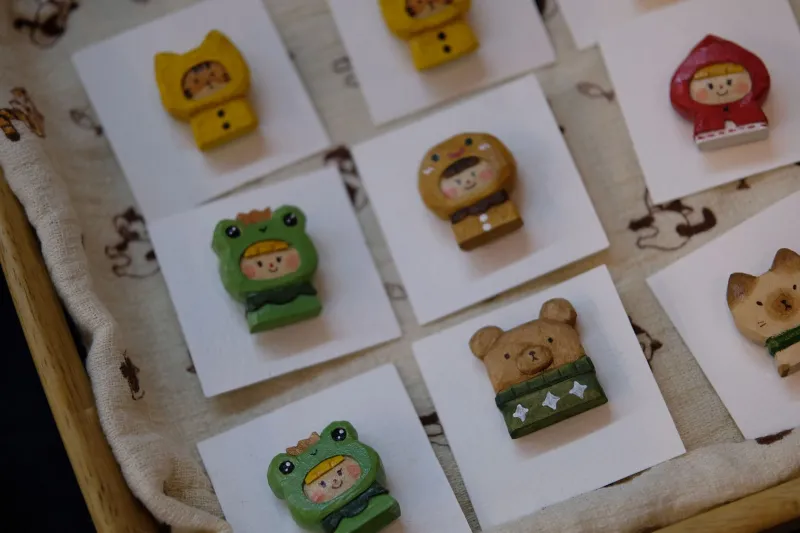
Some of the most sought-after illustrators working in Japan today run small Fantia or BOOTH storefronts (Japan's answer to Patreon and Etsy, respectively) and release work in editions so limited they sell out within hours to the same returning buyers. There's no campaign. There's no PR push. There's just a quiet announcement and a community that was already waiting.
American Artists Are Starting to Feel This Shift
You can see the influence spreading in interesting ways across the US creative scene. Independent musicians are capping their Patreon tiers intentionally — not because they can't get more subscribers, but because they want the community to stay small enough to feel real. Visual artists are releasing prints in runs of 20 or 30 and refusing to reprint them, even when demand is clearly there. Writers are moving off Substack's growth-incentivized model toward quieter, more personal newsletters that never get shared beyond their existing readers.
A lot of these creators, when you ask them about it, will mention Japanese artists they follow. The connection isn't always explicit, but the philosophy is unmistakable: depth over reach, devotion over discovery.
The pandemic probably accelerated this. When live events disappeared and streaming revenue proved to be nearly worthless for anyone who wasn't already massive, a lot of American independent artists had to get honest about where their actual income was coming from. For the ones who survived well, it was almost always some version of direct fan support — people who cared enough to pay, not just stream.
The Limited Edition as a Statement
One of the more elegant expressions of this philosophy is the deliberate limitation of supply. In Japan, this is practically an art form in itself. A ceramicist makes twelve cups. A musician presses 100 copies of a cassette. An illustrator releases one original painting a month, no prints, no reproductions.
This isn't artificial scarcity for scarcity's sake. It's a signal. It says: this was made with real attention, for a real person, not optimized for maximum distribution. The object carries that intention in a way that a mass-produced version simply can't.
American collectors and fans are increasingly responding to this. There's a growing exhaustion with content that feels like it was made to fill a feed, and a corresponding hunger for things that feel like they were made because someone needed to make them. Limited editions, physical releases, hand-finished pieces — these carry a different weight, and people are willing to pay for that weight.
What This Actually Requires
Let's be honest about the trade-off, though. The whisper economy — this whole model of quiet, devoted, intimate fandom — requires patience that American hustle culture makes genuinely difficult to practice.
You're not going to build 800 devoted supporters in a month. You might spend two or three years making work consistently, showing up for the people who are already there, and trusting that the community grows slowly and sticks. That's a real ask in a culture that has made virality feel like the only legitimate proof of value.
But the Japanese artists who've built careers this way didn't start with the audience they have now. They started with a handful of people who really paid attention, and they treated that handful like it was everything. Because it was.
The growth-at-all-costs mentality has a cost that doesn't show up on the analytics dashboard: the erosion of the actual relationship between creator and audience. When everything is optimized for reach, the people who were there from the beginning start to feel like just another number in the count.
The quiet model bets on something different. It bets that a smaller number of people who feel genuinely seen by your work will sustain you in ways that a massive passive audience never could.
So far, for a lot of Japanese independent creators, that bet has paid off. And more American artists are starting to think it might be worth placing.
