Less Is Louder: What Japanese Communication Culture Is Teaching American Creators About the Power of Holding Back
There's a concept in Japanese communication that doesn't have a clean English translation, which is probably fitting. Haragei — roughly, "belly art" — refers to the practice of conveying meaning through what is not spoken. It's the pause before the answer. The caption left blank. The DM you chose not to send. In Japan, this kind of communicative restraint isn't awkward. It's considered a sign of depth, maturity, and, honestly, taste.
Now, more and more American creators are catching on — and the results are kind of wild.
The Oversharing Hangover
Let's be honest: we built the internet on oversharing. Every thought, every process, every half-formed opinion got a tweet, a thread, a TikTok, a Story. For a while, it worked. Transparency felt relatable. Constant posting felt like hustle. Parasocial intimacy felt like community.
But somewhere around the mid-2020s, audiences started getting tired. Not just of other people's noise — of their own. Creators burned out trying to keep up. Fans started feeling less connected, not more, because when everything gets shared, nothing feels special. The signal got swallowed by the feed.
That's when a different model started getting attention — one that had been quietly working in Japan for decades.
What Japanese Creators Already Knew
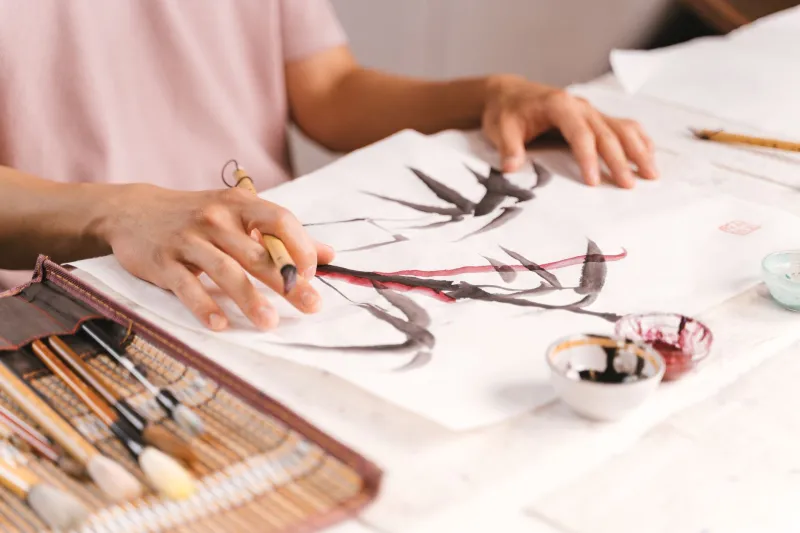
Japanese artists, musicians, and writers have long operated with a kind of deliberate economy of expression. It shows up everywhere: in the negative space of ink paintings, in the unhurried pacing of ambient music, in the way a beloved author might publish once every several years and still have the entire literary world holding its breath.
This isn't scarcity as strategy in the Western marketing sense — it's something more philosophical. The Japanese aesthetic concept of ma (negative space, the meaningful pause) treats absence as an active ingredient, not a gap to be filled. Silence isn't the absence of communication. It's communication doing its most focused work.
For a generation of American creators who've been trained to think that more content equals more relevance, this is almost counterintuitive. But the ones who've leaned into it are finding something unexpected on the other side.
The Creators Rethinking Their Volume
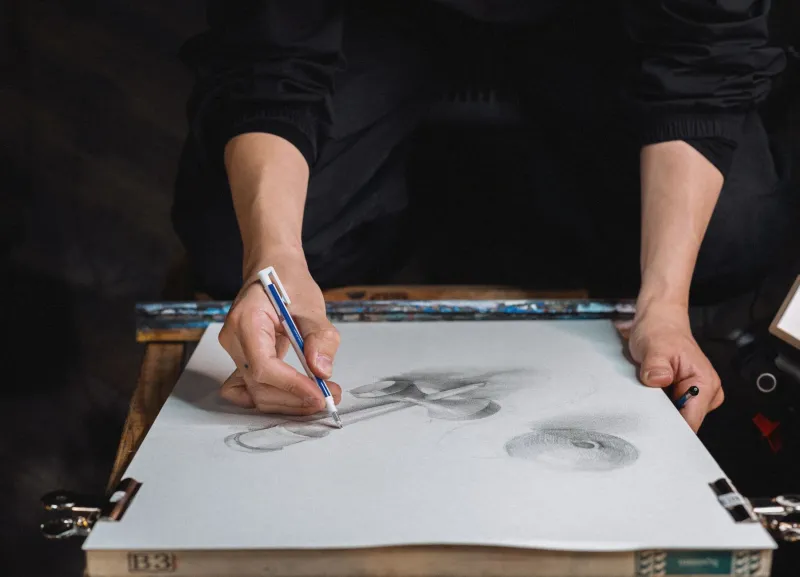
Take the growing number of visual artists who've stripped their Instagram presence down to bare bones — no behind-the-scenes reels, no process videos, no personality-driven content. Just the work, posted infrequently, with minimal or no caption. Some have reported that their engagement per post actually increased after pulling back. Their audience, once trained to expect a steady stream, suddenly started paying closer attention when something did appear.
Musicians are doing something similar. Rather than flooding playlists with singles to stay algorithmically relevant, some independent artists have started spacing releases further apart and communicating less in between — no teaser clips, no countdown posts, just a sudden drop. The silence before the release becomes part of the listening experience itself. Fans aren't just receiving music; they're waiting for it, which means they're actually ready for it when it arrives.
Writers and essayists are experimenting with this too. Newsletters that publish once a month instead of twice a week. Social accounts that go quiet for stretches of time without explanation. No "taking a break" posts, no apology threads — just return when ready, say something worth saying, and trust that the audience will still be there.
Surprisingly often, they are.
Why Restraint Builds Loyalty
Here's the counterintuitive part: audiences don't leave when creators go quiet. Not the right audiences, anyway. What actually happens is a kind of filtering. The casual followers drift. The genuinely invested ones stay — and they pay closer attention because they know something is coming, even if they don't know when.
This maps pretty directly onto how haragei functions in Japanese social contexts. When someone speaks carefully and sparingly, you listen differently. You lean in. You read between the lines. The relationship between speaker and listener becomes more active, more collaborative. The audience stops being passive consumers and starts becoming interpreters.
For creators, that shift is huge. It transforms the fan relationship from one-way broadcast to something closer to a slow, ongoing conversation — the kind where both sides are actually thinking.
Restraint Isn't the Same as Disappearing
It's worth drawing a line here, because strategic restraint and just... not showing up are very different things. Japanese communicative minimalism isn't about withholding out of fear or indifference. It's intentional. Every word that is spoken carries more weight because of the ones that weren't.
For American creators, that means the work of restraint is actually more demanding than constant posting, not less. You have to be more deliberate about what you do share. You have to trust your audience enough to not over-explain. You have to resist the anxiety of the quiet and let it do its work.
That's hard in a culture that equates visibility with relevance. But the creators who've made the shift describe it as genuinely liberating — like finally being able to breathe inside their own creative practice instead of just sprinting to keep pace with a machine.
Learning to Leave Space
One of the most interesting things about this shift is how it changes the texture of what creators actually make. When you're not filling every corner of your online presence with content, you start asking different questions. Not what should I post today? but what am I actually trying to say? Not how do I stay visible? but what's worth being seen?
Those are older questions. More fundamental ones. And in a lot of ways, they're the questions that Japanese artistic traditions have been sitting with for centuries.
American creators didn't invent the idea that less can mean more. But maybe we're finally ready to actually believe it.
The feed will always be there, demanding more. The space you hold open — the pause, the blank caption, the unposted thought — that's yours. Use it on purpose.