Alone on Purpose: Why Japanese Creators Are Turning Solitude Into Their Superpower
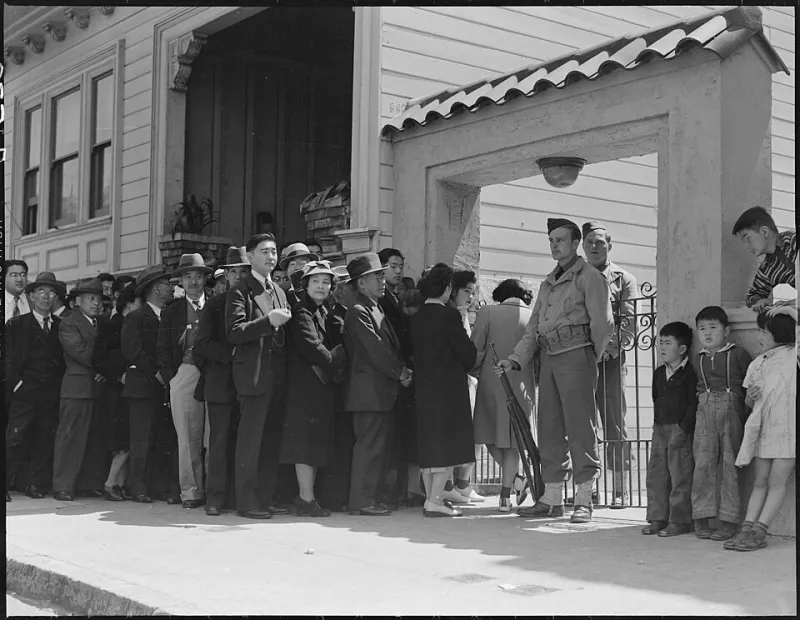
Photo: Dorothea Lange, Public domain, via Wikimedia Commons
There's a particular kind of silence that lives inside a really good piece of art. Not emptiness — more like a held breath. You feel it in a sparse ink painting, in a song with too much space between the notes, in an illustration that somehow says more with less. That silence has a source. And increasingly, that source is intentional.
Across Japan — and now filtering outward through platforms, zines, and niche online communities — a quiet movement is gaining momentum. Artists are choosing to be alone. Not because the world pushed them out, but because they figured out something that hustle culture never could: isolation, done right, isn't a creative dead end. It's a launching pad.
The Loneliness That Creates, Not Consumes
Here in the US, loneliness has a PR problem. We talk about it as an epidemic, a public health crisis, something to fix and medicate and scroll away from. Productivity culture tells us that idle time is wasted time, and that a creator who isn't posting, networking, or dropping new work is falling behind.
But Japanese artistic tradition has always held a different view. Concepts like kodawari — a deep, almost obsessive dedication to craft — and wabi-sabi — finding beauty in imperfection and transience — are built on the assumption that meaningful work takes time, space, and a certain willingness to sit with discomfort. You can't rush that. You definitely can't multitask your way through it.
Contemporary Japanese creators are picking up that thread and running with it. Artists working across illustration, ceramics, experimental music, and textile design are openly talking about how solitude functions as a necessary ingredient in their process — not a side effect, but the whole point.
One illustrator whose work circulates in small-batch print runs describes her studio practice as deliberately unglamorous. No mood boards pinned to the wall, no lo-fi playlist running in the background, no phone within reach. Just her, her tools, and whatever is rattling around in her head that day. "The uncomfortable feelings don't go away when I sit down to work," she's said in interviews. "But they start to take shape. They become something I can actually use."
What American Creators Are Starting to Notice
This isn't just a Japan story anymore. US-based artists and designers — especially those who came up through the Instagram era and are now quietly burning out — are starting to pay attention. There's a growing appetite for creative frameworks that don't require constant visibility, and the Japanese model of solitude-as-practice is filling that gap in a real way.
You can see it in the growing popularity of analog creative rituals: journaling practices, slow sketching, unstructured studio time with no deliverable attached. You can hear it in the way younger American creators talk about needing to "go offline to actually make something." The language is new, but the instinct traces back to something much older.
What's interesting is that isolation, in this context, doesn't mean disconnection from the world. It means disconnection from the noise so you can actually hear the world more clearly. The artists doing this most effectively aren't hermits — they're just very deliberate about when they let the outside in.
Solitude as Structure, Not Punishment
One of the more practical insights coming out of this movement is the idea that solitude needs to be structured to be useful. Unplanned isolation can spiral. Intentional solitude, with clear rituals around it, becomes something closer to a creative laboratory.
A ceramicist based in Kyoto who ships work to collectors in the US and Europe describes her weeks as split between what she calls "input time" and "making time." Input time involves walking, reading, visiting places that have nothing to do with ceramics. Making time is the studio, the clay, the silence. The two don't overlap. That separation, she says, is everything.
This kind of structured solitude produces work that feels different — unhurried, specific, deeply personal. And audiences notice. There's a texture to art made in genuine quiet that's hard to fake and impossible to manufacture at scale.
The Counterintuitive Gift of Creative Friction
Here's the part that might be hardest for American audiences to sit with: the discomfort is the point. Japanese artists working in this tradition aren't trying to optimize their way to a flow state. They're letting the friction stay in the room.
Boredom, uncertainty, the low hum of loneliness that shows up when you take the phone away — these aren't bugs in the creative process. They're features. They're the pressure that turns raw experience into something worth sharing.
There's a reason so much of the work that comes out of this practice feels emotionally true in a way that's hard to articulate. It's because it was made by someone who stayed in the room long enough to actually feel something, rather than reaching for distraction the moment things got uncomfortable.
What This Means for How We Think About Creative Work
If you take one thing from watching how Japanese artists are using solitude right now, let it be this: being alone and being lonely are not the same thing. One is a condition. The other is a practice.
For creators in the US who are exhausted by the expectation of constant output, this distinction is genuinely liberating. You don't have to be productive every day. You don't have to document every step. You don't have to be visible to be working.
Sometimes the most important creative work is the kind no one sees until it's done — the hours spent sitting with an idea, letting it develop on its own timeline, trusting that the quiet is doing something even when it doesn't feel like it.
Japanese artists have known this for a long time. The rest of us are just catching up.